
Every feature on a product has a cost. Not every feature has a return. The distributor’s job in procurement is to identify the features that consumers will pay for, source products that deliver those features credibly, and avoid paying for features that add BOM cost without adding retail value. This is feature-to-margin mapping, and it is the discipline that separates a profitable pet appliance portfolio from one that is busy but broke.
Based on our review of the three categories in our pet appliance program—water fountains, feeders, and drying boxes—here is how the major product highlights map to margin reality.
High-Value Features: The Consumer Pays, and the Cost Is Reasonable
Cordless operation in fountains. The battery and wireless pump add meaningful BOM cost, but cordless capability is the single most requested feature in fountain reviews. It unlocks placement flexibility that corded fountains cannot match. The retail price premium for a credible cordless fountain is substantial, and the feature is easy to demonstrate in-store.
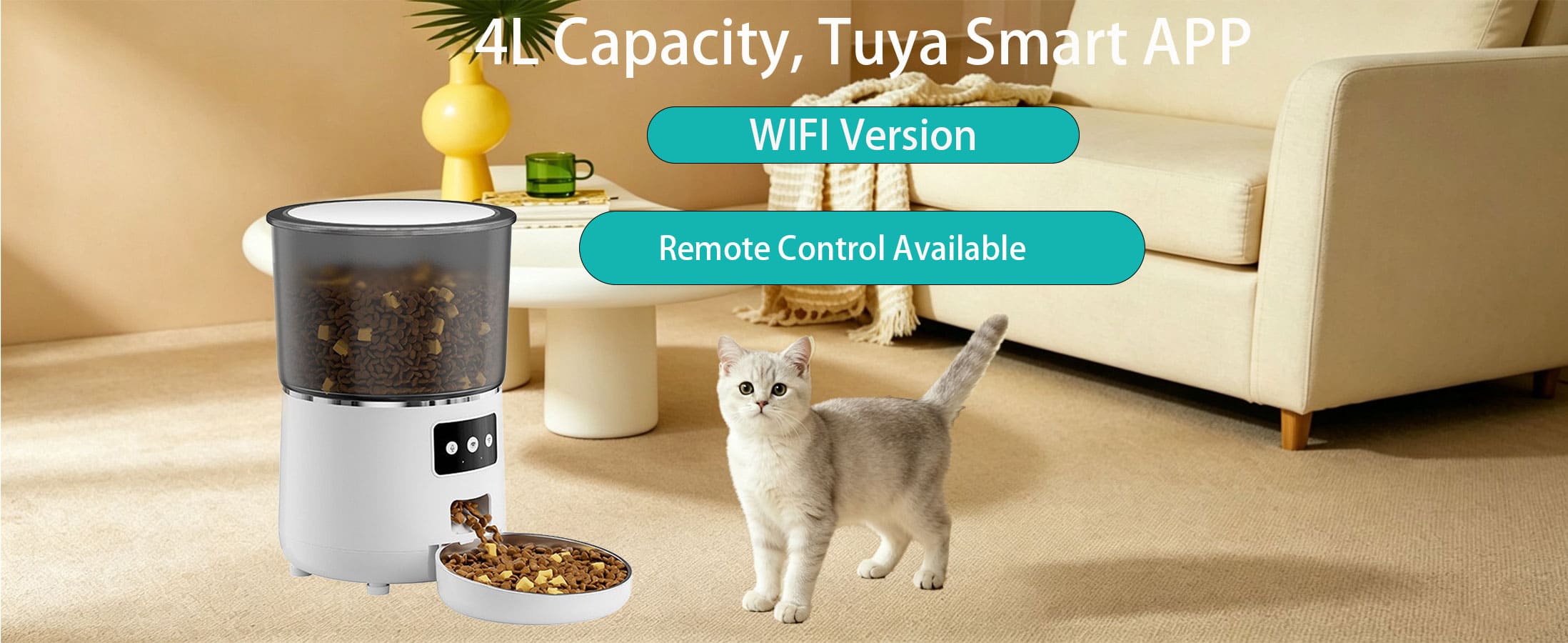
Portion precision in feeders. Conveyor-based dispensing systems cost more than simple auger or gravity mechanisms, but portion accuracy is the reason consumers buy a smart feeder rather than a cheap timer feeder. The feature is verifiable, communicable, and directly linked to the health outcome the owner cares about.
Fresh air ventilation in drying boxes. This is the feature that makes the product safe. It is not optional, and it is not a margin lever in the traditional sense, because a drying box without adequate ventilation should not be sold at any price. The margin comes from being one of the few distributors offering a product that meets the safety standard.
Moderate-Value Features: Worth Including, but Not the Primary Selling Point
UVC sterilization in fountains. The feature is valuable and increasingly expected at the premium tier, but consumers do not intuitively understand UVC. It requires education at the point of sale. The BOM cost is moderate. Include it in premium SKUs, but do not make it the headline feature in marketing.
App connectivity across categories. Apps add development and support cost. They are table stakes at the premium tier, but they are not the reason a consumer chooses one product over another unless the app delivers a genuinely useful function (health tracking, remote feeding). Budget for app maintenance as a recurring cost, not a one-time development expense.
Slow-feed mode in feeders. A valuable health feature with modest BOM impact. It is a strong secondary selling point, particularly for dog owners, but it is not the primary reason someone buys a feeder.
Low-Value Features: Cost Without Proportional Return
Excessive hopper capacity. A feeder that holds 24 cups of food sounds impressive, but most consumers refill weekly regardless. The extra capacity adds packaging size, shipping cost, and storage burden. A 4L to 5L hopper covers the realistic use case for cats and small dogs.
Cosmetic design variations. Multiple color options add SKU complexity and inventory risk. Unless the retailer specifically requests variety, standardize on one or two colors per model and use the tooling savings for features that matter.
Over-specified motor power in drying boxes. A 350W motor is sufficient for the airflow required in a properly designed box. A higher wattage without a corresponding improvement in airflow path design is marketing, not engineering. Pay for airflow performance, not wattage on a spec sheet.
The Procurement Framework
Before committing to a new pet appliance SKU, we apply three questions to every feature on the supplier’s list.
First: Can the consumer verify this feature in the first five minutes of use? Cordless operation is immediately apparent. Portion accuracy is apparent within a day. UVC sterilization is not apparent at all without education. Features that require trust rather than experience are harder to sell and more likely to generate returns when expectations are unmet.
Second: Does this feature reduce a failure mode or add a convenience? Failure-reduction features (auto shutoff, battery backup, temperature safety limits) protect the brand and reduce warranty costs. Convenience features (app control, voice recording) drive initial purchase but do not prevent dissatisfaction. Both matter, but they play different roles in the margin equation.
Third: What is the support cost? A feature that generates customer service inquiries without generating satisfaction is a net negative. App connectivity that fails at setup, voice recording that is inaudible, or a slow-feed mode that confuses the user all create support burden that erodes margin. The best features are the ones that work without explanation.
Conclusion
The pet appliance category rewards distributors who understand that consumers are not buying appliances. They are buying peace of mind about their pet’s hydration, nutrition, or comfort. The features that map to that peace of mind—and that can be delivered credibly at a reasonable BOM cost—are the features worth sourcing. Everything else is noise.