
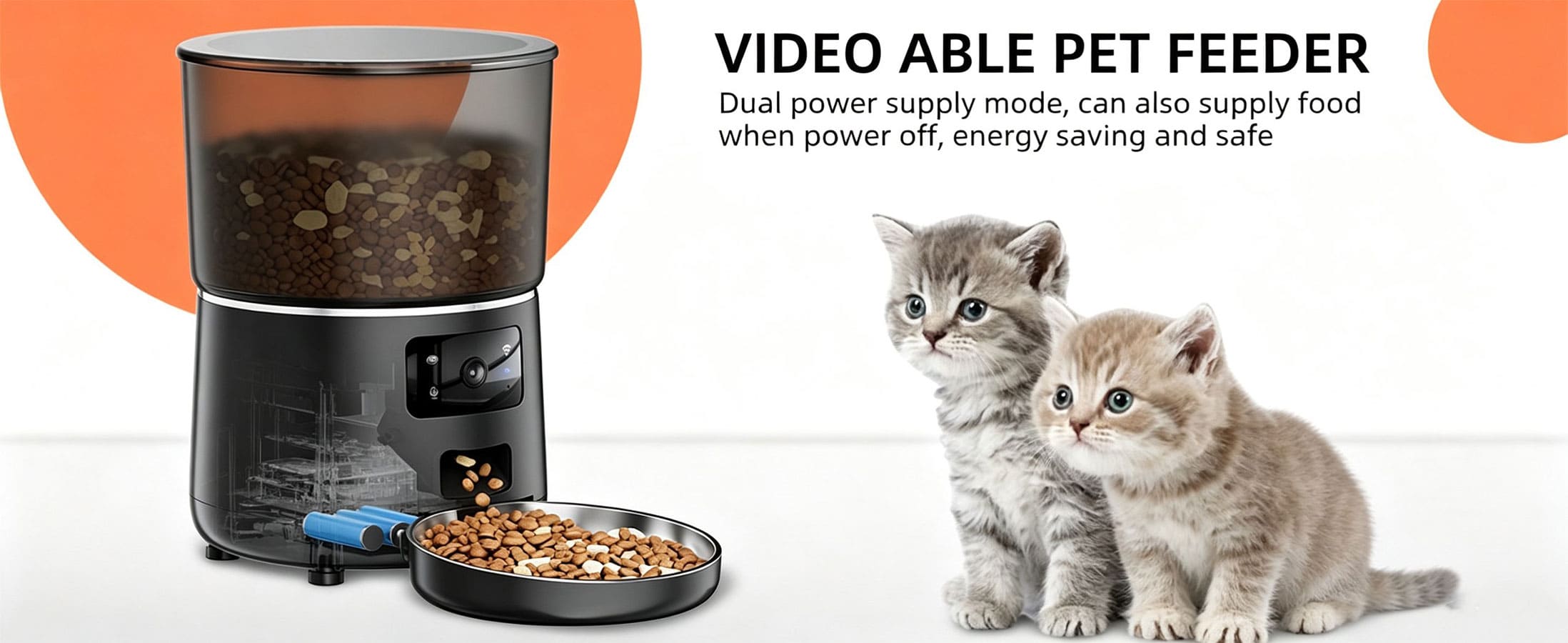
Automatic pet feeders occupy a strange position in the small appliance market. The basic function—dispensing food on a schedule—is simple and inexpensive. A mechanical timer feeder can be built for a few dollars. Yet consumers routinely pay $80 to $150 or more for smart feeders. The gap between commodity and premium is not about the dispensing mechanism. It is about the features that address the real anxieties of pet owners: Am I feeding the right amount? Is the food fresh? What happens if I am delayed?
These are the product highlights that justify the premium price point, and the features procurement should prioritize.
Highlight 1: Precision Portion Control with Flexible Scheduling
The core value proposition of any premium feeder is portion accuracy. The leading products allow portions as small as 1/8 cup and as large as 4 cups, with up to 12 meals per day programmable. This range matters because it covers the full spectrum of use cases: a cat on a weight-management plan needs small, frequent portions; a large dog needs volume. A feeder that only dispenses in crude increments forces the owner to compromise on the pet’s diet.
Procurement verification: request the dispensing mechanism’s accuracy specification. Conveyor-based systems generally outperform auger-based systems for portion consistency, especially with varied kibble sizes. Ask the supplier for a test report showing portion weight variance across ten consecutive dispenses at the smallest and largest settings.
Highlight 2: Freshness Lock Systems
Dry food degrades when exposed to air and moisture. Premium feeders address this with multi-layer sealing systems. The best designs use a triple fresh-lock system: a sealed hopper lid, a desiccant compartment, and a dispensing chute that closes between meals. This keeps kibble crunchy and preserves nutritional value, which matters to owners who buy premium food.
This is a feature that is difficult for competitors to copy quickly because it requires tooling precision. A hopper lid that does not seat properly, or a chute that does not seal, defeats the entire system. Procurement should request a moisture ingress test report or conduct an in-house trial: fill the hopper, place it in a humid environment for two weeks, and inspect the kibble at the bottom of the hopper for softening.
Highlight 3: Anti-Clog and Slow-Feed Modes
The most common failure mode for automatic feeders is clogging, particularly with kibble shapes that do not flow freely. Premium feeders incorporate anti-blockage designs and, increasingly, a slow-feed mode that dispenses meals gradually over a period (typically 15 minutes) rather than all at once. Slow feeding addresses a genuine health concern: dogs and cats that gulp their food are at higher risk of vomiting and bloat.
This feature is a strong differentiator in retail copy because it speaks directly to a health outcome, not just convenience. For procurement, verify that the slow-feed mechanism works across the full range of kibble sizes the product claims to support, and that the anti-clog design does not create a new failure point in the dispensing path.
Highlight 4: Dual Power Supply with Low-Food Alerts
A feeder that stops working because the power went out, or because the hopper ran empty unnoticed, defeats its purpose. Premium feeders use dual power: an AC adapter with battery backup, so feeding continues during outages. They also include low-food sensors with app alerts, so the owner knows to refill before the pet misses a meal.
The battery backup is a low-cost feature with outsized perceived value. It is also a feature that commodity feeders often omit. When comparing supplier quotes, confirm that the battery backup is a true automatic switchover, not a manual mode the owner must activate.
Highlight 5: Two-Way Audio and Voice Recording
The emotional hook of a premium feeder is connection. The best products include a microphone and speaker for two-way audio, plus the ability to record a short voice message that plays at mealtime. For owners who travel or work long hours, this transforms the feeder from a utilitarian device into a way to maintain presence in the pet’s daily routine.
This feature adds meaningful BOM cost—the audio components, the app integration, and the testing overhead—but it is one of the most frequently cited features in positive consumer reviews. It also differentiates the product in a crowded category. Procurement should verify audio clarity and volume; a voice recording that is inaudible over the dispensing mechanism is a feature that will generate complaints rather than praise.
Procurement Recommendation
The feeder category rewards distributors who resist the temptation to source the cheapest unit. The features above—precise portioning, freshness sealing, slow-feed, dual power, and audio—are the reasons consumers pay premium prices. A supplier that cannot demonstrate these features with verifiable specifications is a supplier that will compete on price alone, and price alone is a losing strategy in a category where the consumer’s emotional investment is high.